Fine arts programs in public schools give students creative outlets across visual art, music, theater, and dance while strengthening academic and personal growth. This page explains what the fine arts are, why art matters in schools, and the classical and modern branches of the discipline, and includes an FAQ on included subjects, grade-level availability, and student performances.
Creativity takes the stage
Fine Arts Programs in Public Schools
Fine arts education is a key part of a well-rounded curriculum in K-12 public schools. These programs foster creativity, encourage self-expression, and contribute to academic and personal growth. From music and theater to visual arts and digital design, fine arts open doors to new interests and lifelong skills.
What Are the Fine Arts?
Fine arts include creative disciplines that are valued for their aesthetic, emotional, and intellectual expression. These can range from traditional mediums to modern, digital platforms.
Examples of Fine Arts:
Drawing & Painting
Photography & Digital Art
Literature & Poetry
Music & Theater
Dance & Performance
Architecture & Sculpture
Film & Multimedia
Why is Art Important in Schools?
Research shows that arts education strengthens brain development and contributes to a student's overall well-being.
Benefits of Arts Education:
Enhances fine motor skills and creativity
Boosts emotional intelligence and self-confidence
Improves communication and social interaction
Linked to higher attendance, better test scores, and increased graduation rates
What Are the Classical and Modern Branches of Fine Arts?
Three Classical Fine Arts:
Painting
Architecture
Sculpture
Seven Recognized Fine Arts:
Architecture
Sculpture
Painting
Literature
Music
Performance (Theater, Dance)
Film
Why Support Fine Arts in Education?
Fine arts programs are not just about talent-they're about exploration, discovery, and self-expression. By participating in school arts programs, students gain:
Opportunities to explore their passions
A safe space to express themselves
Exposure to culture and history
A stronger connection to their school and community
Fine Arts Programs FAQ
Fine arts programs in public schools provide students with opportunities to participate in creative subjects such as visual arts, music, theater, and dance.
Fine arts education may include:
Visual arts
Music (band, choir, orchestra)
Theater and performance
Dance
Offerings may vary by school district and campus.
Yes. Fine arts programs are part of the public school curriculum and are offered as both classroom instruction and elective courses.
Fine arts programs help students:
Develop creativity and self-expression
Build confidence
Strengthen communication skills
Engage in collaborative learning
No. Students can participate in fine arts programs at different skill levels, and many programs are designed to support beginners as well as advanced students.
Fine arts opportunities are typically available across multiple grade levels, with offerings varying by school and district.
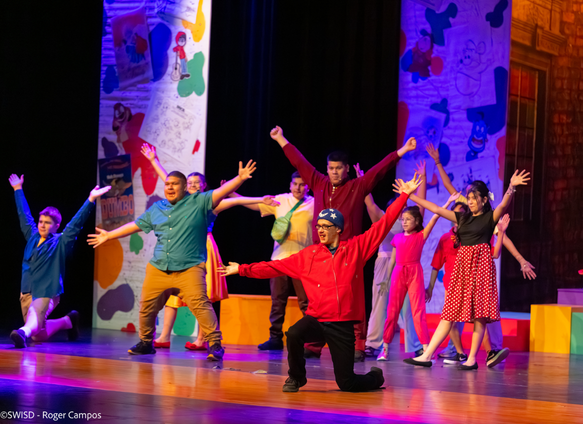
Yes. Many fine arts programs offer students opportunities to participate in performances, exhibitions, or showcases of their work.
Fine arts programs support learning by encouraging creativity, discipline, and critical thinking while reinforcing academic and personal development.
Yes. Fine arts programs are part of the public school system and are generally provided at no cost, though some activities may require supplies or participation fees, depending on the district.
Students develop skills such as:
Creativity
Collaboration
Communication
Problem-solving
Self-expression
Fine arts participation supports overall student engagement and can help improve focus, motivation, and school involvement.
Fine arts programs are offered in public schools across Texas, with specific courses and opportunities varying by district.
Program Spotlight: Fine Arts
Fine Arts has meaningful impacts and benefits of creating wonderful experiences for students. This creates an exciting environment for hands-on skills and interactive projects.